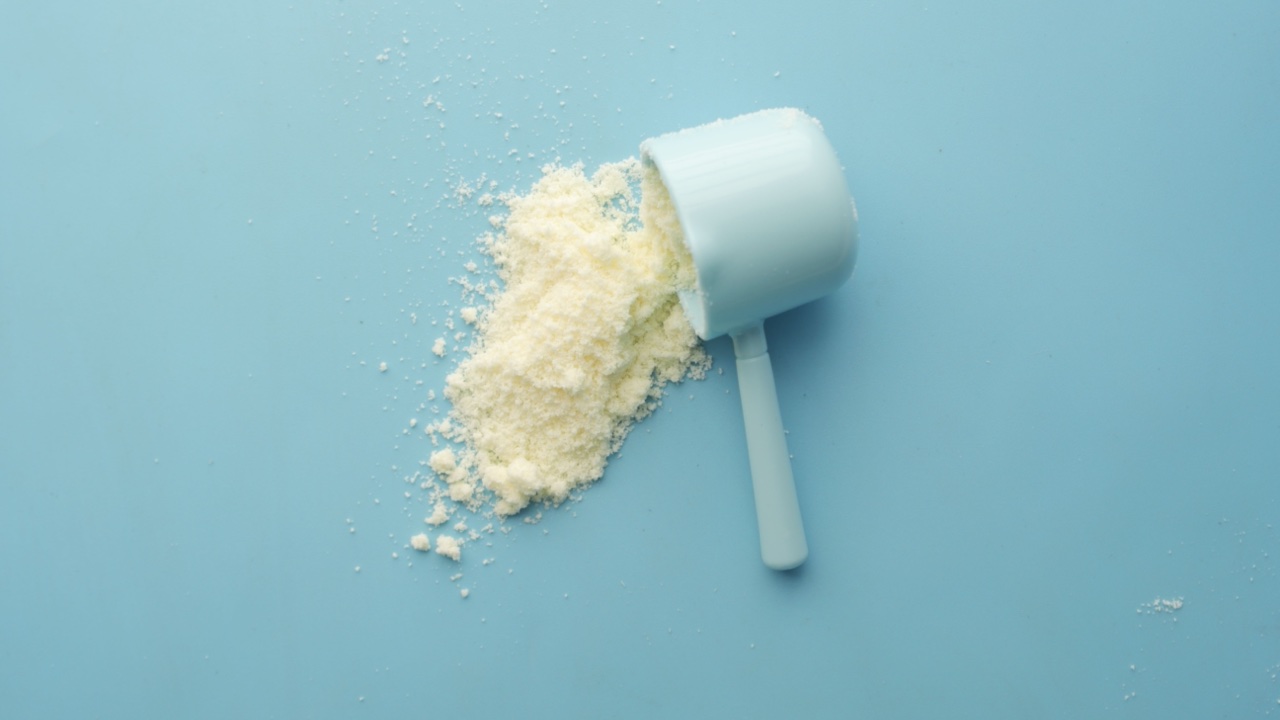
When a supplement brand starts planning a glutathione product, the first decision is usually the delivery format: capsule, tablet, liquid, sublingual, or powder. Most consumer-facing marketing focuses on the end product — the capsule someone swallows or the sachet they dissolve in water — but at the formulation stage, the choice of raw material form shapes nearly every downstream decision. And when you ask formulators which starting form they prefer to work with, the answer is almost always bulk powder.
Here’s why that preference exists, and what it means for brands sourcing ingredients.
Flexibility Is the Primary Driver
A powder is neutral in a way that pre-formed dosage units are not. When you receive glutathione powder as a raw material, you can put it into capsules, press it into tablets, dissolve it into liquid sachets, blend it into a stick pack formula, or incorporate it into a topical product. The same raw material works across multiple product formats without reformulation. If your brand launches a capsule product this year and wants to add a powder-blend SKU next year, you’re not starting from scratch on your ingredient sourcing.
This flexibility also applies during the formulation development phase. When a contract manufacturer or in-house formulation team is developing a new product, they need to be able to adjust the dosage, test different excipient combinations, and run small-scale trials before committing to a production format. Bulk powder makes this possible. Pre-encapsulated or pre-tabletted forms don’t.
Stability in Powder Form vs Liquid
Glutathione is a tripeptide — glutamate, cysteine, and glycine — and it’s reactive enough that its stability depends heavily on the form it’s in and the conditions it’s stored under. In aqueous solution, reduced glutathione (the active L-GSH form) degrades through oxidation. Dissolved in water or in a liquid supplement formula, the molecule’s shelf life is significantly shorter than in powder form.
In dry powder form, properly packaged with moisture barriers and stored away from heat and light, glutathione maintains its potency over a much longer period. This is the reason most finished liquid glutathione products either use stabilized forms of the molecule, add antioxidants to the formula, or use nitrogen-flushed packaging — they’re compensating for the inherent instability of the dissolved state. Starting with powder and converting to a stable finished format is far more manageable than trying to maintain stability in a pre-made liquid base.
Dosage Precision
Powder is easy to weigh accurately. Capsule shell sizes come in fixed volumes, which constrains how much active ingredient you can include alongside excipients. A capsule product at a given dose may require larger capsules, split doses across multiple capsules per serving, or reduced excipient load to fit the active ingredient at the target level.
Powder blends don’t have this constraint. The formulator can optimize the ratio of active ingredient to excipients — flow agents, sweeteners, flavors for consumer palatability, stabilizers — without being boxed in by the geometry of a capsule. For high-dose glutathione products, where the effective dose range is typically 250mg to 1000mg per serving, this matters practically: fitting 500mg of glutathione plus excipients into a single capsule is challenging; formulating a 500mg scoop in a powder blend is straightforward.
What Formulators Look for in a Bulk Powder Supplier
Purity is the non-negotiable specification. Reduced glutathione (L-GSH) in bulk powder should be assayed at 98% or higher by HPLC to be considered pharmaceutical- or nutraceutical-grade. Below that threshold, the effective dose in the finished product becomes harder to guarantee, and the nature of the impurities matters from a safety standpoint.
Particle size matters for two reasons: dissolution rate in liquid applications, and flow properties in powder blending and encapsulation. A very fine powder may be optimal for sachets but create flow issues in tablet pressing. Suppliers who can provide particle size data and offer different grades are more useful partners for formulators working across multiple product formats.
The certificate of analysis — particularly the third-party HPLC assay, heavy metals panel, and microbiological testing — is what a responsible formulator reviews before signing off on a supplier. A supplier who provides full, third-party-verified COAs without being asked is demonstrating the documentation standard that makes product development and regulatory compliance manageable.